In the world of modern music production, we are constantly drowning in screens, endless plugin menus, and digital interfaces. Consequently, these elements can easily stifle our creative spark. Sometimes, to find true inspiration, you need something radically different. In other words, you need something tactile.
Enter Teenage Engineering. Known for redefining the aesthetics and functionality of musical instruments (just look at the iconic OP-1), the Swedish brand has struck gold again. Specifically, they have created the TP-7 Field Recorder. However, don’t let the “voice recorder” label fool you. For music producers, sound designers, and sampling enthusiasts, this pocket-sized piece of high-tech design is a secret weapon.
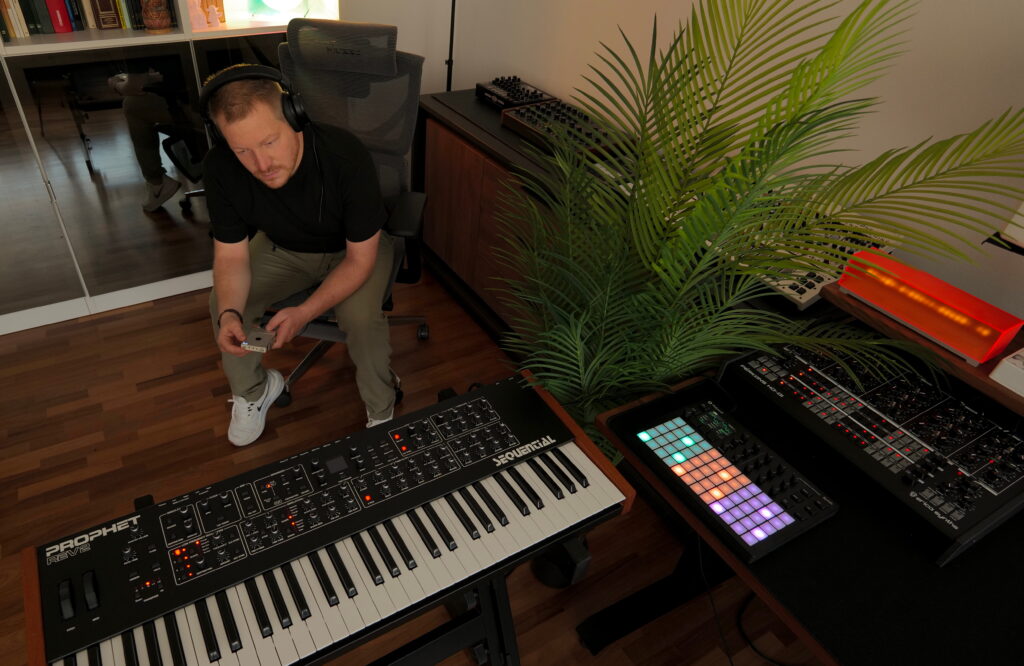
The Return of Touch: The Motorized “Tape Reel”
The first thing that catches your eye on the TP-7 is definitely the central rotating disc. This isn’t just a nostalgic visual gimmick; instead, it’s driven by an ultra-smooth, brushed motor that simulates the movement of a vintage tape reel.
For this reason, producers on the hunt for unique samples will find that this tactile control changes everything:
- Manual Scrubbing: You can physically touch the wheel to scrub through your audio, slow it down, speed it up, or pause to find the exact transient you want to sample.
- The “Rock” Lever: Located on the left side, this ergonomic rocker lets you fast-forward or rewind with one hand, adjusting the speed based on how hard you press.
Why producers love it: Sampling becomes visceral again. For example, you can capture an ambient sound on the street, physically manipulate it by dragging your finger on the reel, and subsequently record that organic pitch-bend effect in real time.
Studio-Grade Specs in the Palm of Your Hand
Despite its tiny footprint—it literally fits in the palm of your hand—the TP-7 packs serious, studio-grade hardware. Therefore, Teenage Engineering refused to compromise on audio quality.
| Feature | TP-7 Specifications |
| Internal Storage | 128 GB (enough for hundreds of hours of high-quality samples) |
| Battery Life | Up to 7 hours of continuous recording |
| Connectivity | 3x TRRS bi-directional jacks (inputs/outputs), 1x headphone jack, USB-C |
| Audio Interface | Functions as a 6-in / 2-out USB audio interface |
In addition to those three versatile mini-jacks, the TP-7 can record from multiple sources simultaneously. Whether you are using synths, external mics, or smartphones, it easily becomes the brain of an ultra-portable travel setup.
A Night in Venice: A Personal Field Recording Story
To truly understand how this device alters your workflow, let me share a personal story. Last November, I found myself in Venice around 2:00 AM, right near Campo San Giacomo dell’Orio. Anyone who knows Venice knows that at that hour, far from the tourist crowds, the city undergoes a complete metamorphosis. As a result, it becomes a magical echo chamber of heavy silences and impossible reverbs.
At that time, I had been stuck for weeks on the title track of my upcoming EP. The mix felt “cold”—too digital and too clinical. In short, it lacked depth and that haunting atmosphere capable of transporting the listener to another world.
Fortunately, I slipped my hand into my coat pocket, and my fingers met the sleek, brushed aluminum body of the TP-7. While walking around Venice with bulky field recording gear is an absolute nightmare, the TP-7 was invisible, completely blending into the palm of my hand.
Capturing the Sound of the Canals
Next, I stopped on a small stone bridge. Below me, the dark water of a secondary canal lapped lazily against the mossy foundations of an ancient palace. Meanwhile, in the distance, the rhythmic, hollow echo of someone walking down a deserted alleyway bounced off the narrow stone walls.
I quickly pressed the side record button, and then the central disc began to spin. I held the TP-7 over the canal for a few minutes, capturing the deep slosh of the water, the creak of a wooden mooring pole, and that ghostly, distant footstep reverb.
Manipulating Samples in Real Time
The real magic, however, happened while I was waiting for the Vaporetto (the water bus) to head back to the mainland. Because I couldn’t resist, I plugged in my headphones and used my index finger to scrub the motorized wheel.
First, I slowed the water sounds way down, stretching the splashes into a deep, hypnotic, sub-bass texture. Second, using the side lever, I pitched up the distant footsteps, turning them into a crunchy, lo-fi percussive loop. In fact, the TP-7’s virtual tape head imparted a natural saturation and warmth to those sounds that no digital plugin on my computer had ever managed to replicate.
The next morning in the studio, I hooked up the device via USB-C. By using it as an interface, I bounced that manipulated slice of Venetian night straight into my DAW. Ultimately, that midnight sample became the intro and the rhythmic backbone of Laguna Satura—the most streamed track of my entire project.
The Verdict: Is It Worth It?
To conclude, the Teenage Engineering TP-7 is not cheap, and there is no point in hiding it. Indeed, it sits firmly in the premium luxury bracket of music gear. Nevertheless, for those who live for unique sampling and sound design, you aren’t just buying a recorder. On the contrary, you are buying a completely new way to interact with sound. So, if you are tired of staring at frequency graphs on a monitor and want to literally put your hands back onto your music, the TP-7 is the ultimate tool to take your sonic exploration to the next level.